Posted in About, EDS 113

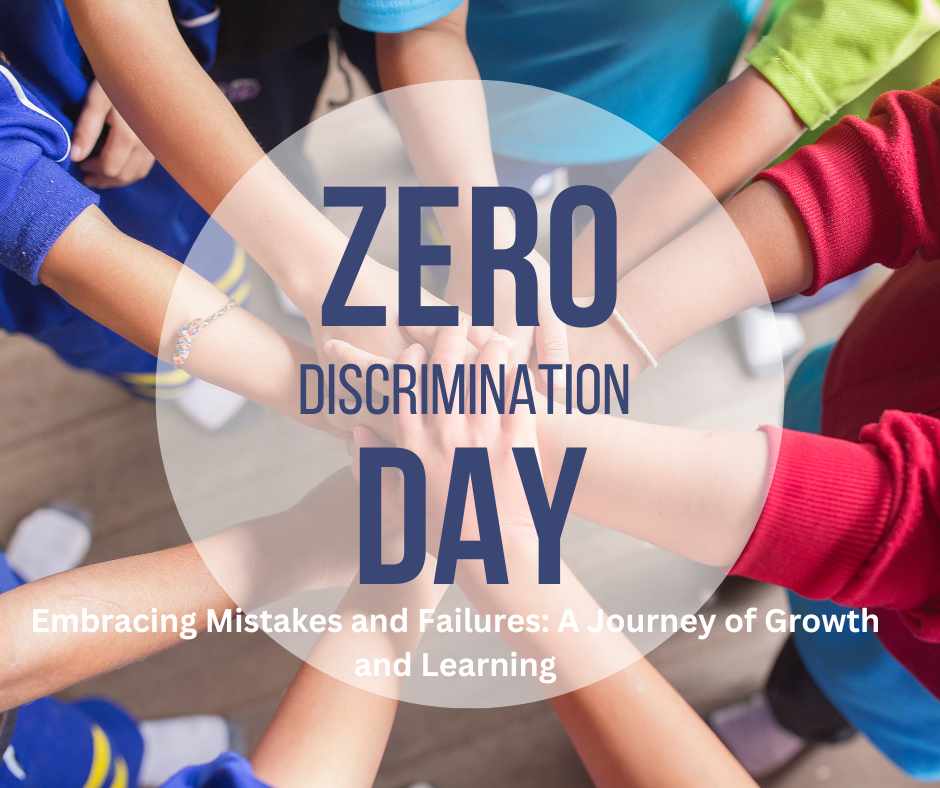
Embracing Mistakes and Failures: A Journey of Growth and Learning

As I reflect on the various insights gained from the lesson on the power of mistakes, failures, rubrics, and feedback, I am reminded of the profound impact these elements have on our learning journey. From the fear of zeros and the stigma associated with failures to the transformative potential of mistakes, the lessons I’ve learned resonate deeply. The notion that mistakes and failures are threats to learning is a common sentiment that many of us experience. Zeros, mistakes, and failures have often been synonymous with inadequacy, leading to feelings of discouragement. However, I now understand that these setbacks are not endpoints, but rather stepping stones towards growth. Learning from failure, as highlighted in the TEDxTUM talk by Dean Shepherd, requires a shift in perspective. Failure is not a final verdict but a chance to reflect, adapt, and persevere.

Moreover, feedback’s role as a crucial tool for learning has also been underscored. Constructive feedback not only guides our understanding of concepts but nurtures our ability to take risks. The insights on rubrics also enlightened me about the importance of clear expectations. Properly interpreting rubric scores and emphasizing growth over perfection can foster a positive learning environment.

On the positive side, embracing mistakes and adopting a growth mindset are fundamental to effective learning. Mistakes, rather than being feared, are celebrated as essential components of the learning process. This mindset shift encourages resilience and innovation, paving the way for deeper understanding and mastery. I now recognize the role of educators in shaping these perspectives. Teachers and parents can influence our responses to mistakes, either promoting a fear of failure or encouraging us to take risks. Creating an environment that fosters collaboration, iterative learning, and self-reflection is pivotal to nurturing a positive mindset.

This insightful journey through the nuances of learning from mistakes, leveraging rubrics, and valuing feedback has taught me the importance of embracing failures, celebrating growth, and redefining success. Every misstep becomes a chance to learn, grow, and ultimately flourish as a more resilient and adaptable learner.

Posted in About

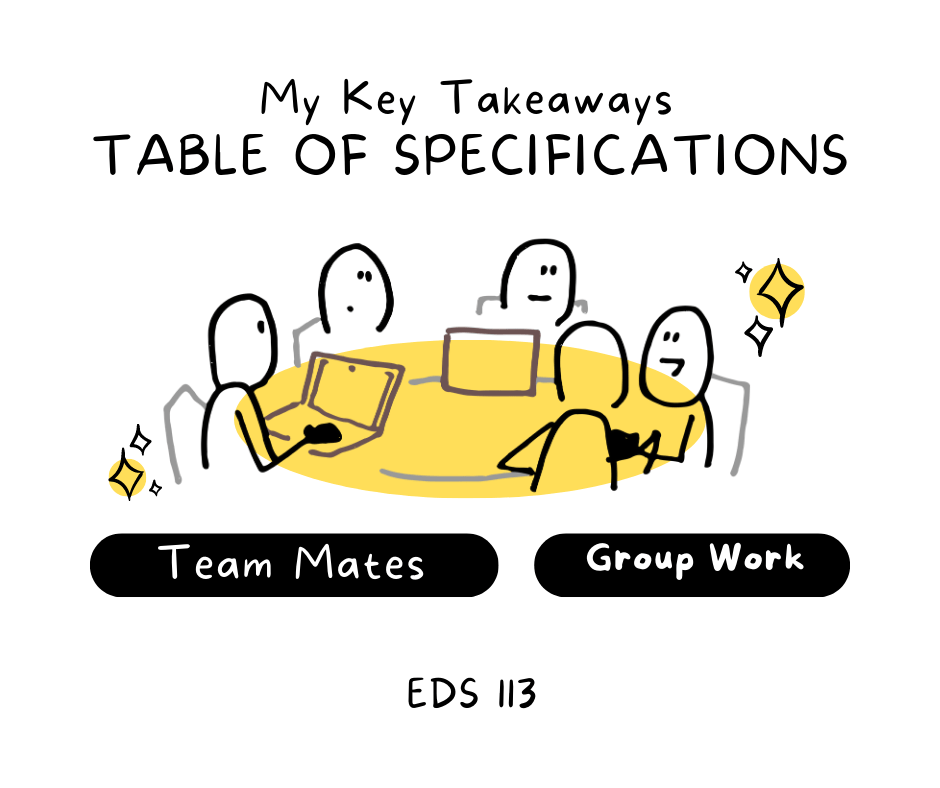
Key Takeaways: Table of Specifications

This e-jourmal entry is to share insights gained from the process of improving an existing table of specifications (TOS) and engaging in collaborative group work. The focus has been on achieving clarity, alignment, and practical cooperation within the context of educational assessment.

A table of specifications is a pivotal document outlining the content and skills to be assessed in an educational framework. The endeavor to refine a TOS within a group setting prompted a comprehensive exploration of the following essential considerations:

  • Clear Learning Objectives:

A key takeaway is understanding the significance of clearly defining the learning objectives or outcomes that the assessment aims to measure. This involves establishing goals that are Specific, Measurable, Achievable, Relevant, and Time-bound (SMART).

  • Ensuring Complete Content Coverage:

Understanding the importance of consistency between the assessment and the curriculum, it is crucial to ensure that all relevant content areas align with instructional goals. This alignment avoids unnecessary emphasis on any particular aspect.

  • Defining Cognitive Levels:

Specifying cognitive levels at which each objective will be assessed promotes a balanced evaluation. This includes levels such as remembering, understanding, applying, analyzing, evaluating, and creating.

  • Guidance from Bloom’s Taxonomy:

The integration of Bloom’s Taxonomy aids in categorizing learning objectives based on cognitive complexity. This strategic alignment contributes to a general assessment about diverse cognitive skills.

  • Calculated Weightage and Difficulty Assignment:

Assigning appropriate weightage to each objective based on its significance and relevance to the course.  Awareness of the difficulty level of each objective to ensure a fair distribution of easy, moderate, and challenging items.

  • Diverse Assessment Item Types:

Determining the types of assessment items, such as multiple-choice questions, essay questions, practical tasks, etc., that will be utilized to evaluate each learning objective.

  • Facilitating Collaborative Group Work:

Working within the group to establish clear roles and responsibilities for each member. We are fostering open communication and regular meetings to discuss progress, challenges, and ideas.

  • Merging of Consensus and Alignment:

Seeking agreement among group members concerning content, objectives, and assessment methods is crucial. Ensuring alignment with course objectives and educational standards establishes the validity of the TOS.

  • Continuous Review and Revision:

A commitment to regular review and revision based on insights from group members is integral. Making revisions as needed to reflect changes in the curriculum or educational goals.

  • Embracing Continuous Improvement:

Recognizing that the TOS is a dynamic document that can evolve over time. I am committed to continuously monitoring its effectiveness and making adjustments based on data and feedback.

By conscientiously attending to these relevant considerations and fostering a collaborative atmosphere within the group, I am confident that I can enhance the quality and effectiveness of the table of specifications for assessments.

Posted in About

Welcome!

Hi, I’m Rex, a father of two, passionate about early learning education, marketing, and disruptive technology. Thanks for visiting!