

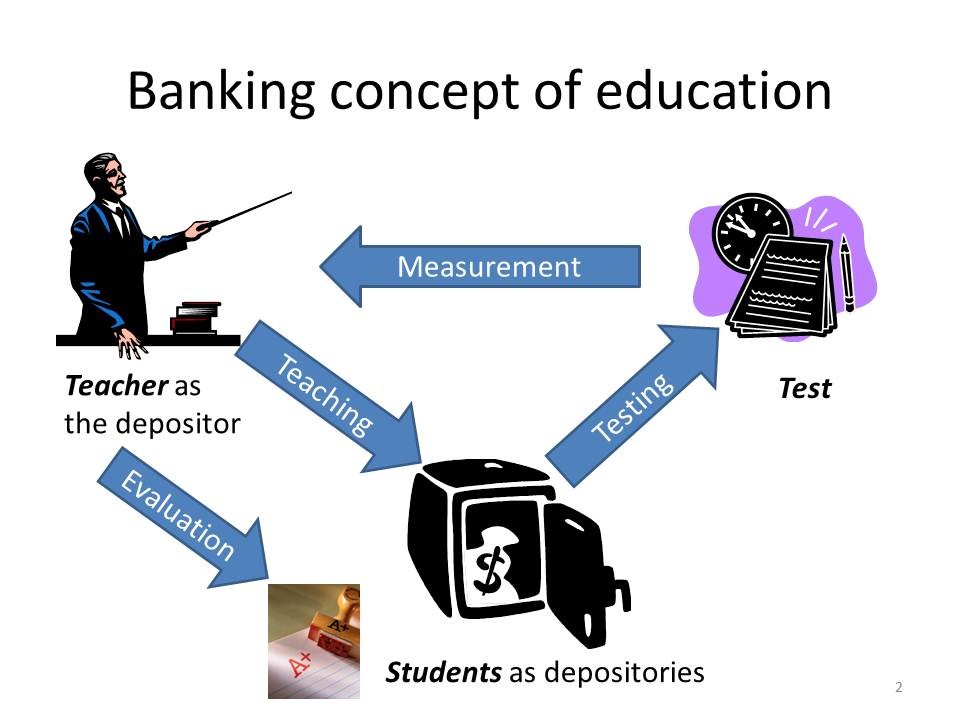
The method of instruction that was used in our elementary school back in the early 1980s closely resembles the banking system that Freirie describes.
We were given the directive to read our textbooks, memorize material, and perform exceptionally well on the summative examinations. We were given the information that a successful learning experience is characterized by high scores and good grades. Our instructors delivered lectures on all of the topics that were covered across all of the subjects, with very little interaction with us, the students. The ideas that were presented as principles and concepts are the ideas that have been reached as a conclusion and are the ideas that we need to accept. These ideas should not be challenged or questioned. This kind of learning only goes in one direction and does not stimulate the learner’s curiosity or intuition. Our generation has most likely been responsible for producing a large number of workers who are process-oriented and obedient, and these individuals have been successfully integrated into our society. Even though it might appear to be a positive development, moving forward will not be possible under these circumstances.
It is essential that we move away from using this method of instruction in our current educational setting, and it is essential that the constructivist educational philosophy be implemented in our classrooms. Students should be encouraged to participate actively in the learning process and interact with one another through the use of collaborative learning. Learning through hands-on experience and going on excursions outside of the classroom are both great ways to inspire students to be curious and motivated. It is essential to make use of various forms of media as well as audio-visual resources in order to consolidate learning and enhance memory retention. The teachers can set up situations in which the students can challenge their assumptions about the material or the teachers. Students will be able to learn more effectively and process information more quickly if their education shifts away from what is known as traditional teaching and toward constructivist teaching and learning.
References
Herbert. (2020, June 23). Constructivism learning theory. Griffl.Org. https://griffl.org/constructivism-learning-theory/
McLeod], [saul. (2019). Constructivism as a theory for teaching and learning. https://www.simplypsychology.org/constructivism.html
No title. (n.d.). Study.Com. Retrieved May 20, 2022, from https://study.com/academy/lesson/constructivist-teaching-principles-explanation.html
Paolo Freire. (n.d.). Final. Retrieved May 20, 2022, from https://eprofoliofall2013english.weebly.com/-paolo-freire.html

 Learning Together Now