What are we thinking after we’ve had some experiences and learned some lessons in life? What are some of the things you need to keep in mind if you want a career in education someday? Are you considering positioning yourself as a leading educator in the industry today? Some of the questions that need to be answered while one is studying to become a teacher in the future. To what extent, however, have we been able to cultivate all of the lessons that we have encountered up to this point? Did we just teach ourselves everything we need to know, or did we somehow study more than we normally would in order to understand a lot of the theories that we cover in our classes?
No matter what the questions are, the only way for us to know for certain the answers is if we have learned enough to put these skills into practice in the role of an educator someday. Both education and psychology devote a significant amount of their research to the study of the learning process. Learning requires a variety of actions on our part, depending on how we wish to engage in the process of acquiring the information, experiences, and knowledge that we seek. Learning is a process that requires effort and can influence both our actions and the way we perceive the world around us. Of course, there are a lot of obstacles to overcome, but learning is made much simpler by the fact that we have to deal with a variety of problems. There are a number of challenges, some of which include cognitive, environmental, and motivational issues. In conclusion, education is not a one-way street; in order to learn, we not only need to interact with other people and our environment, but we also need to feel the changes that take place within us as we continue to learn and assimilate new information.
It did not occur to me a few years ago that I would one day be writing this ejournal and going through another four years of schooling by enrolling in the Bachelor of Education Studies program at UPOU. I was aware that this would be a difficult task for me to complete because, for the past 30 years, I have been actively engaged in the real world, dealing with real issues and problems in both my professional and personal life. I have come to the conclusion that it does not really make a difference whether you are young or old, a student or working when it comes to learning new things even in theories and new concepts. Not only does it stimulate your thirsts to gain more knowledge, but it also somehow proves the theories you are studying to be true to your experience. When you are young, it can be very challenging to comprehend that a person can learn and mature through the experiences that they have, learn from their environment and interaction with different people, and learn from another person who is more knowledgeable than you.
Now I understand why there are so many different learning theories, for instance, given the number of psychologists and scientists that have contributed to their development. Each person is one of a kind and possesses their own cultural heritage in addition to having their own distinct social interactions, both of which are indicative of how they process learning. My viewpoint is that education is open to all people, has no upper age limit, and does not mandate the use of any specialized materials or equipment. It is simply coming to terms with the fact that as long as we live, we are constantly gaining new knowledge.
The proliferation of personal development seminars, as well as gurus and self-proclaimed experts in various fields, leads us to question whether or not the knowledge that we have gained is valid and useful. It is true that these personalities and seminars have found success, and their approaches have demonstrated that they are correct for them, as well as possibly for more than a handful of other people. Nevertheless, this shouldn’t have any bearing on our own individual educational path. Each of us comes to our own conclusions regarding matters of epistemology. On this journey, I have come to the conclusion that I cannot discount either what I have learned through my experiences or what I have learned through my education. It has been brought to my attention that we acquire knowledge not only from the surroundings in which we find ourselves but also from the manner in which we engage with the people and institutions that make up our society. Our brains are able to store more information when we attend academic classes and participate in educational seminars because these activities help us acquire new knowledge. For me, it is necessary to strike a balance between the things I learn and the experiences I have, and then to apply those things in a manner that is appropriate to the objective I have set for myself.
Education technology concept. Schoolboy learning in the room. Online school. EdTech.
At this point in time, the information age has reached its pinnacle. Every day, we are confronted with a massive amount of information, and this information is simultaneously available to us at any time and in any location. The question at hand is whether or not the information in question is useful to teachers and students living in the present day and age. It is true that this generation has become so knowledgeable as a result of the reach of the information; however, in many cases, the learners are more of a passive recipient rather than active participants of these information and the learning process.
Photographer: Meredith Forrest Kulwicki Published October 20, 2021
Instead of passively absorbing information from the internet and other digital media resources, teachers should encourage students to actively construct their own knowledge. Educators have a responsibility to foster students’ social and communication skills by cultivating an atmosphere in the classroom that emphasizes group work and the free flow of ideas. Students need to develop the ability to express and articulate their own thoughts rather than simply repeating what they see digital influencers saying online. The students’ educational path must be reflective of their interaction with their environment and must be constructed on the basis of the experiences they have had in the real world, apart from the metaverse world in which they live.
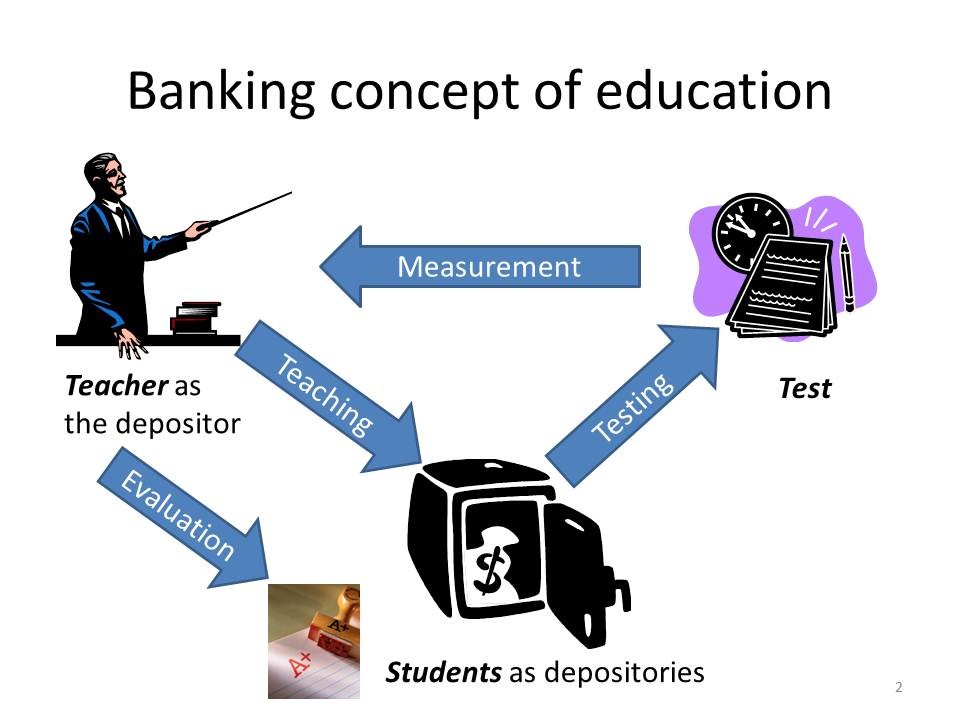
The method of instruction that was used in our elementary school back in the early 1980s closely resembles the banking system that Freirie describes.
We were given the directive to read our textbooks, memorize material, and perform exceptionally well on the summative examinations. We were given the information that a successful learning experience is characterized by high scores and good grades. Our instructors delivered lectures on all of the topics that were covered across all of the subjects, with very little interaction with us, the students. The ideas that were presented as principles and concepts are the ideas that have been reached as a conclusion and are the ideas that we need to accept. These ideas should not be challenged or questioned. This kind of learning only goes in one direction and does not stimulate the learner’s curiosity or intuition. Our generation has most likely been responsible for producing a large number of workers who are process-oriented and obedient, and these individuals have been successfully integrated into our society. Even though it might appear to be a positive development, moving forward will not be possible under these circumstances.
It is essential that we move away from using this method of instruction in our current educational setting, and it is essential that the constructivist educational philosophy be implemented in our classrooms. Students should be encouraged to participate actively in the learning process and interact with one another through the use of collaborative learning. Learning through hands-on experience and going on excursions outside of the classroom are both great ways to inspire students to be curious and motivated. It is essential to make use of various forms of media as well as audio-visual resources in order to consolidate learning and enhance memory retention. The teachers can set up situations in which the students can challenge their assumptions about the material or the teachers. Students will be able to learn more effectively and process information more quickly if their education shifts away from what is known as traditional teaching and toward constructivist teaching and learning.
Photo credit by https://www.happyneuronpro.com/en/info/divided-attention-activities/
Smartphones and other mobile technologies are being utilized in educational settings as well as in homes, with the belief that these devices can enhance human cognitive ability. However, there has been a great deal of research conducted on the three aspects of cognition that are most frequently brought up when discussing the effects of mobile technology, specifically on attention, memory, and the ability to delay gratification. There is also evidence regarding the habits associated with using smartphones and general cognitive functioning. It was also mentioned that using these devices for an extended period of time may have an effect on the user’s ability to think, remember, pay attention, and regulate their emotions.
The current studies in the field today takes a look at the potential cognitive effects of behaviors related to smartphone use. Also, there is growing evidence that there is a significant relationship between the technology of smartphones and one’s cognitive performance; however, there is not enough scientific evidence to support any conclusions that can be made with absolute certainty. The public has a perception that there is a causal relationship between the unrestricted use of multimedia devices among children and the rise in the prevalence of attention deficit hyperactivity disorder (ADHD) in children and teens, which predates the development of smartphone technology (e.g., Visser et al., 2014). Mobile phones are the primary means by which today’s adolescents interact with their peers and pass the significant amounts of time. For younger children, mobile phones and tablets have replaced babysitters and pacifiers as the go-to entertainment options. Because of their increased use at a younger age and greater exposure to smartphones, children and teens are developing shorter attention spans (Nikken and Schols, 2015). The use of these devices on a consistent basis can lower attentional capacity, leading to attention spans that are shorter and tendencies toward “scatterbrained” behaviors (e.g., Egan, 2016).
There is a direct correlation between the effects of using smartphones and attention that is divided or focused in children and teenagers. The ability to ignore other stimuli in order to concentrate intently on a single source is what we mean when we talk about having focused attention. Attention that is focused also includes attention that is sustained, which is the ability to focus for an extended period of time. The ability to divide one’s attention, on the other hand, is synonymous with multitasking skills. The utilization of these tools can at times compromise the aforementioned skills and capabilities. The most difficult obstacle we face right now is figuring out how to take advantage of recent advances in technology without letting that impact our ability to acquire new knowledge.
Vedechkina, M., & Borgonovi, F. (2021). A review of evidence on the role of digital technology in shaping attention and cognitive control in children. Frontiers in Psychology, 12, 611155. https://doi.org/10.3389/fpsyg.2021.611155
Wilmer, H. H., Sherman, L. E., & Chein, J. M. (2017). Smartphones and cognition: A review of research exploring the links between mobile technology habits and cognitive functioning. Frontiers in Psychology, 8, 605. https://doi.org/10.3389/fpsyg.2017.00605
Social learning begins the moment you realize that you want to be that person who the people around you are constantly praising and recognizing when you were just growing up. This realization is the first step in the process of social learning. When I was a kid, I remember that my parents, grandparents, and other relatives were always praising and rewarding the majority of my cousins for their excellent academic performance, as evidenced by the fact that they had received high honors at their respective schools. The same thing goes for congratulatory messages and bragging about the achievements of my other older cousins who excel in their respective professional careers.
It is accurate to say, according to Albert Bandura’s social learning theory, that our development in human cognition is connected with our behavior, such as our thoughts and feelings, our cognition growing out, and our environment, which acts as an external social stimulus. While I was growing up, I worked hard to achieve excellence with the goal of eventually earning the same rewards and recognition. This guides me in developing my sense of self-efficacy in the process of pursuing my career. However, there are a number of factors that will come into play that will prevent you from achieving your goals, which will cause you to feel unhappy and frustrated. It is a fact that throughout your life, you will encounter a greater number of setbacks than successes; however, those setbacks should be viewed as opportunities to gain valuable experience and insight. Your ability to self-regulate will, in the end, be the single most important factor in determining whether or not you are successful in overcoming the challenges you face on a daily basis.
My Models and Mentors
Role Models and Mentors
Their Contributions
My Grade 2 Teacher
She was the one who understood me that I can excel on any work I put my mind into
My parents
I saw how hard working they are in sending us to school no matter how hard our life was when I was growing up and how kind hearted they are
The type of role model I want to be for others (other learners)
Respectful
Honest
Modest
Responsible
Diligent
How I will incorporate models and mentors in my profession (as an educator) For example on teaching Science – Providing students with the opportunity to learn through direct experience how the workings of a concept or the contributions of an inventor have improved their lives as well as the lives of their families and other individuals.
For Arts for example – Learning from the experts, such as personifying well-known artists by recreating their works and telling their stories through the medium of their work, which is an art piece, is an important part of art education.
Who will be my education mentor? What would my ideal education mentor be like? My ideal mentor is someone who is enthusiastic about imparting useful knowledge to children through hands-on instruction. A guide whose sole mission is to impart their expertise to the students under their tutelage.
The most important aspect of learning about Behaviorism is observation. It can be accomplished by conducting extensive research on various organisms, both animals and humans, and recording their behaviors in order to contribute to the growing field of psychology. After reading these articles on behaviorism, I began to wonder: what are some examples of different practical applications of behaviorism in this day and age? Those working in the clinical field are the first obvious choice for those interested in learning more about behaviorism. In recent years, pop culture, social reforms, and norms have emphasized the importance of mental health to a person’s well-being. Personally, I believe that maintaining a person’s mental well-being at an optimal level is necessary for the individual to be a valuable and functioning member of society.
Having worked in the business field for decades, I understand firsthand how a monotonous lifestyle and seemingly aimless cycle can be taxing on the human psyche. Knowing the fundamentals of behaviorism gives me a new and broad perspective on why some people have ended up the way they are if they have no incentive to recover from their depressive and stressful states. I’ve also grown to appreciate the concept of behaviorism as I’ve gotten to know some of my elementary school students better. Each of the students on our campus comes from a variety of backgrounds, families, and educational backgrounds. This allows us, as educators, to find more efficient and effective ways to provide students with an enjoyable yet meaningful learning experience at our school.
The only disadvantage of knowing this knowledge of behaviorism is that I will not be able to fully comprehend how some of our students and staff members are behaving in unpredictable ways despite fully understanding what they went through and the education route that they took in order to be in our school. Disruptive behaviors and unruly discipline can create an unfavorable working environment. If we are unable to adapt and cater to the needs of the child or our school staff members, our entire school curriculum and learning system may be disrupted. There may have been information that prevented the parents of the students or school employees from coming up with solutions to the issues at hand, so we would not be able to see the root of the problem and ensure that the situation is remedied. With my newfound knowledge of behaviorism, I might be able to compile a list of possible explanations for why they are acting the way they are.
Being able to focus more on developing a student’s skills and knowledge in a subject where they are struggling while also focusing on their strengths in another subject is a core value in our school community. My knowledge of behaviorism will be useful when evaluating and revising our school curriculum and syllabus for each school year. We have gradually moved away from the traditional method of teaching subjects and toward a more hands-on approach and experiential learning that our students have found most enjoyable. As a result, each of our teachers on our school staff will be able to report on how their students performed in each of their sessions, and brainstorm ways to ensure that the struggling student absorbs the lesson material much better than they did the week before. This process must be repeated by the student and the teacher until the student has a proper understanding of the lesson material being learned by the class as a whole. This is where we start the process of improving the child’s cognitive abilities so that the child can better absorb the lesson material.
As the founder of an elementary school, not only should I be able to meet the expectations of the students’ parents and the students themselves, but I should also be able to look after my own school staff, because what good is a school if there are no teachers to look after the students’ education? Certain behavioral patterns have emerged over the years from staff members who have made unsatisfactory progress in the workplace, which I have failed to notice. Before I knew it, I was required to sign their letters of resignation in order to keep our school running and the jobs of the other school staff members safe. If I had been able to identify these behavioral issues and ensure that they were given multiple chances to make amends, I would have been able to keep them in our ranks. Having to go through this process is a truly difficult situation. It could all have been avoided if my newly expanded understanding of behaviorism concepts had come into play back then to provide them with solutions to their problems. As a result, in order to keep our workforce well-maintained and to prevent any further disruptive behavior from disrupting our operations, I have decided to implement a weekly welfare check-up for each staff member in order to have a proper evaluation of their mental and emotional health. This would entail an interview between the teacher and an HR representative in order for them to express their grievances to the school organization and leadership and find a solution to alleviate some of their troubling thoughts. As a result, the overall welfare of the school staff will be satisfied, and the operations of will not be disrupted in the long run.
I am sure there are many criticisms of Behaviorism, but my main issue with it is that there is no solid ground for the case that is Behaviorism. There will be times when we simply cannot understand or predict the actions of the average citizen. First and foremost, they may be unwilling to share all of the information that came with their upbringing; thus, we are left with a blank slate to work with and not much to go on. We will be unable to begin our journey towards a solution if we are not given much to begin with. There is only one simple solution to this underlying issue, and that is to be given more time to work with the individual in question. Without a doubt, the knowledge that comes with Behaviorism is extremely beneficial in analyzing human and animal behavior. However, we are often so preoccupied with our abilities to recognize behavioral patterns that we fail to recognize the importance of having first-hand experience with the person we are attempting to figure out and assist. Creating bonds will help us better understand and recognize the implicit roots of behavior that cause disruption in the workplace. There must be ways to apply the concept of behaviorism more effectively in order to improve our way of living and working in the workplace. Similarly to how I would be able to better recognize behavioral problems in this manner, I may be able to better understand how a young student’s mind works. With a better understanding of how to better mold our students to be brought up in the way that they should go, we will be able to help more students recognize their full potential in academics and sports. This way of thinking has the potential to revolutionize education if more schools adopt a more hands-on approach to experiential learning and absorbing new information. Gone would be the days of lecturing students for poor performance in exams and projects; instead, there would be days of encouraging students’ growth in learning new concepts by shifting from a traditional way of sharing knowledge to a more experiential-type growth in both their strengths and weaknesses. Finally, behaviorism paves the way for a better and more modern approach to educational systems throughout the world. With this future of quality education, we will be able to shape our students into tomorrow’s leaders, resulting in a better world for us.
Intelligence is innate in all of us; all that is required is for us to discover and cultivate it. People of intelligence are typically distinguished by the manner in which they speak, the knowledge of which they possess, the manner in which they solve problems, and their mastery of specific subjects. People always come to the conclusion that if you are intelligent, you will be successful in whatever endeavors you choose to pursue in your life. In the majority of cases, intelligence and successful learning are intertwined with one another. In the absence of appropriate utilization and application, intelligence alone will not result in successful learning. Someone has successfully learned something when they have completely grasped the theory or concept in question and have successfully applied or implemented it in their daily lives.
People are not born with all of the intelligence that is expected of them, according to Howard Gardner’s theory of Multiple Intelligences. This is a valid argument for Gardner’s theory of Multiple Intelligences. He proposes that intelligences are not solely based on cognitive abilities, but that each individual possesses a genius of eight different types of intelligences, which are as follows: Linguistic,
ON INTELLIGENCE AND EDUCATION
Asians are regarded as intelligent individuals in the western world. When they see an Asian student, it immediately comes to their mind that they are mathematical and scientific geniuses. Asian parents who live in the west are not exempt from these perceptions, and as a result, all of the pressure is passed down to their offspring. On the other hand, the children are expected to go above and beyond what is expected of them. In the Philippines, we were taught that if we bring home medals and certificates for the highest achievements in our studies, it will bring honor to our parents and grandparents.
Our country’s approach to education and perception of intelligence differs from that of other developing countries. Our society, schools, and the tools we employ place a greater emphasis on academics, particularly in the areas of mathematics, linguistics, and science. One of the reasons for this is that we are still following the western education pattern that was in place during the Industrial Revolution. According to Howard Gardner’s theory of multiple intelligences, we as a country have not changed our attitude toward and approach to education, despite the fact that we must also enrich and cultivate other areas of intellect in order to succeed.
IMPLICATIONS ON POLICIES AND BROADER PRACTICES
If our educational system can find a way to change their approach to teaching our students and cultivating their intelligence, we will be able to produce a new generation of talents who will contribute to the advancement of our country. The notion of having achieved academic excellence at the highest level will be critical to a successful personal and professional life in the future. Our country has a large pool of intelligent people, but this has not resulted in any significant improvements in our economy. We must recognize that evaluating students is more than just evaluating their performance on an exam; rather, cultivating that intelligence and making it useful to society is what the society requires.
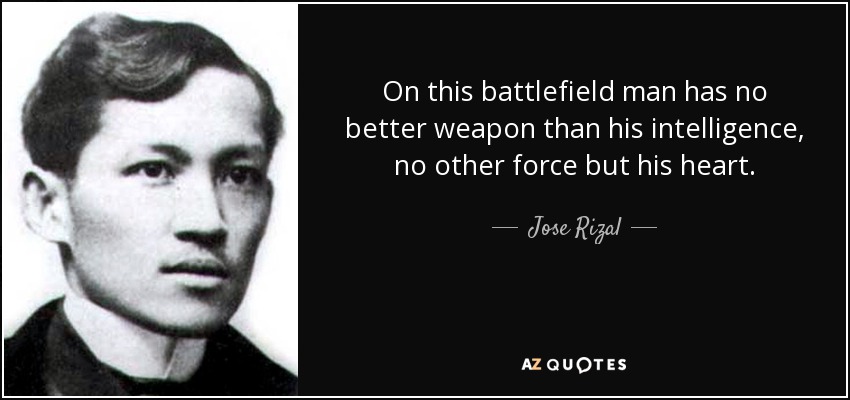
On this battlefield man has no better weapon than his intelligence, no other force but his heart. – Dr. Jose Rizal
As Dr. Jose Rizal says in the quote above, learning with our hearts and minds can make a significant difference in our daily lives and careers. As human beings, we must resist the temptation to live our lives as if we are merely following social norms and the ways in which other people live in our surroundings. We must continue to learn new things in order to improve our own lives as well as those of those around us. We learn in order to be able to create and make things. We learn in order to make better decisions and think more logically. We learn in order not to be persuaded by other people’s points of view. In order to accept learning, we must also be willing to accept change and discomfort.










 Learning Together Now