We still tell the kids that learning is fun, or at least that it should be fun. Although the task was challenging, particularly when working full-time, I learned a lot in this course and gained additional knowledge that I can apply in my daily life. I agree that learning and growth should continue throughout one’s lifetime.
Challenges will still emerge, and we should be prepared to meet them head on. I hope that my fellow students will not simply store all of the lessons we learned in this course, but will instead learn to incorporate them in our daily tasks.
Let’s go! There’s a chat room! Moodle! Zoom!. Collaborating with peers and team members can take several forms. Achieving a common goal and putting disagreements aside is a key element in getting the job done. Taking part in this joint activity with my teammates was a wonderful learning opportunity and an unforgettable experience. Our group work allowed us to see firsthand how the theories we learned about in EDS100 were put into practice. We were able to see some of the theories in action for a brief period of time. Each member of the group set aside time to contribute to the group’s success. We gained a better understanding of how the learning process can be extended and adapted to current learning conditions as a result of the exercise.
For a job well done, I’d like to express my gratitude to my 2 Baltes teammates. We were able to complement and adapt to each other’s unique learning styles. I believe that learning is a lifelong process that can help us grow self-esteem, accountability, and become more self-directed learners through collaborative learning.
I hope you enjoy the video below about collaboration. To all of you who are learning, I wish you luck.
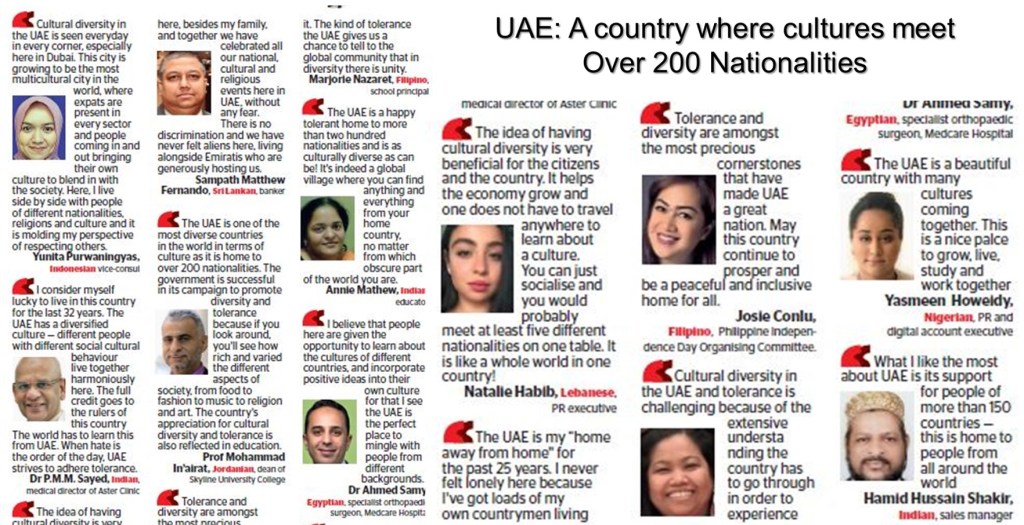
What would you do if one of your decisions landed you in a culturally diverse setting? I’ve lived in the UAE for the past two and a half decades, in a city that is home to people from over 200 different countries. The near absence of naive stereotyping and prejudice is prevalent in most areas of the United Arab Emirates today, as cultural diversity within the nation serves to remind us of the dignity and respect bestowed to those of a different nation. We immerse ourselves in the new experiences that the UAE can offer us through a new way of thinking about globalization, gaining new knowledge about other countries, and experiencing both the local and international cultures of the country itself. Every day, we see and meet people from other countries, and we learn from them about the ideals, attitudes, values, backgrounds, and experiences they brought with them from their home countries.
Diversity is what allows for cultural experiences, which can be defined as differences between individuals from various nations around the world. It is also the driving force behind the United Arab Emirates’ economic, social, and intellectual development, as it serves as a crossroads for various opportunities and worldview perspectives that can be contributed by people of hundreds of nationalities. As a result, diversity allows a working environment to grow exponentially in terms of efficiency and cooperation, because each employee will be able to provide valuable insight from a range of perspectives. Employers in the UAE recognize the value of diversity and are encouraged to hire a diverse range of people from various backgrounds to add value to their own businesses.
Diversity not only contributes value to a company, but it can also boost morale and inspire equality among fellow employees. This prevents people from discriminating against the other party as well as being discriminated against. Diversity allows us to appreciate the differences between people, regardless of how they behave or look. Instead, these distinctions are highly valued by the company and its employees.
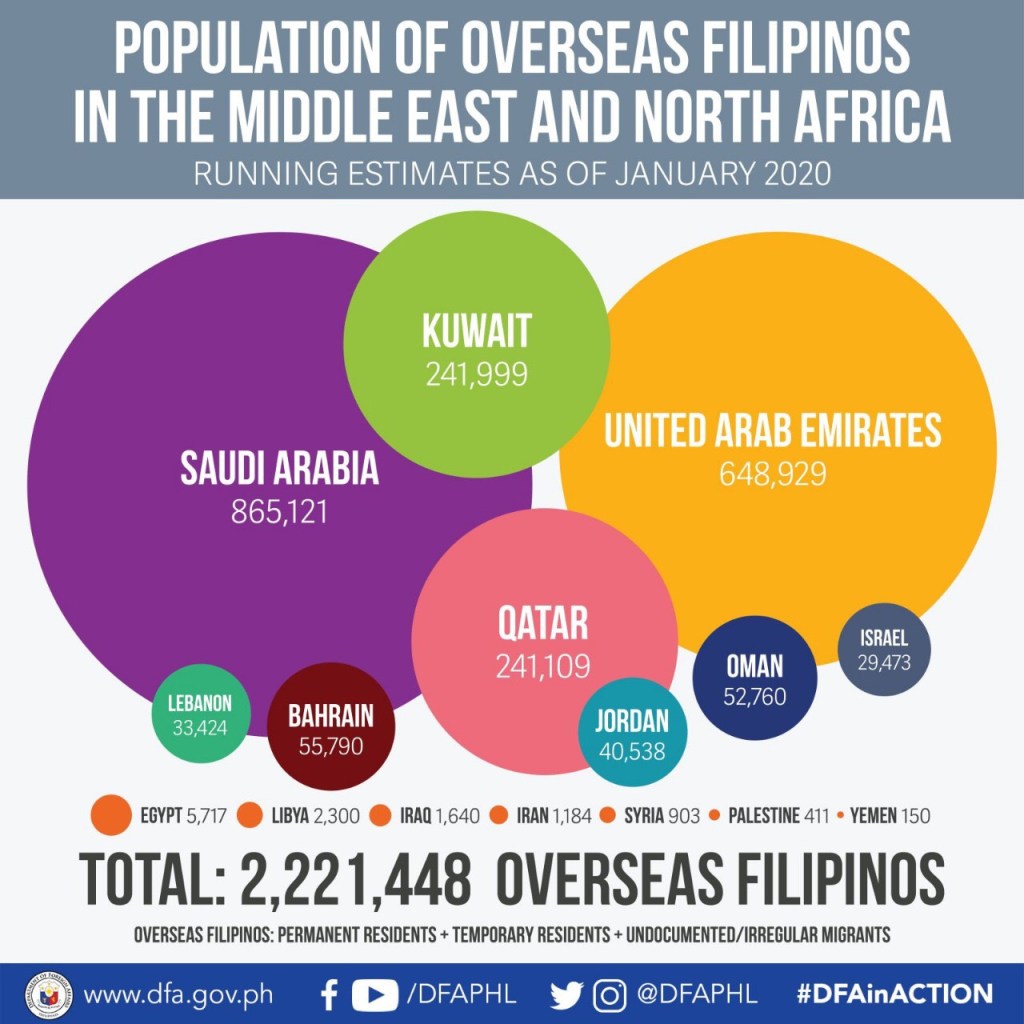
As of January 2020, there are estimated 2,221,448 Filipinos in the Middle East Region. These Filipinos comprise of permanent and temporary residents, and undocumented/irregular migrants.
I’ve been living outside of our home country for over two and a half decades. I’ve worked with diverse people and nationalities in various industries, including restaurants, retail, manufacturing, and being a service crew and sales and marketing personnel. In each stage of my career, I had both failures and successes. But here’s what kept me going and why I’m still here. I’ve had my fair share of rejections and accolades, but why continue when I sometimes feel discriminated against and yearn to be at home with my parents and friends? My motivation for working abroad when I first started was to help my parents and siblings. When I first became an OFW, my goal was to send financial assistance to my family while working nearly 18 hours a day and living in a room with 11 other guys. My salary at the end of the month is more important than the difficulties I’m experiencing. My motivation was the external rewards I was receiving at the time, but that quickly faded when I realized that the small amount of money I was sending back home could help my family.
And as the years passed, my motivation shifted from rewards to internal satisfaction to knowing where my skills and competencies could be put to use—knowing that one of my purposes as an OFW is to represent my people and country. It is also the acceptance and assurance that comes from knowing that my own family will be there for me, both in abundance and in need.
Every OFW has their own happy and sad stories, and each of us has our own set of motivations. We must not equate their happy faces and awesome and joyful social media posts with success and happy life. We hope that one day our lives will inspire a generation to study and work hard to build our nation and that this generation will no longer aspire to be an OFW.
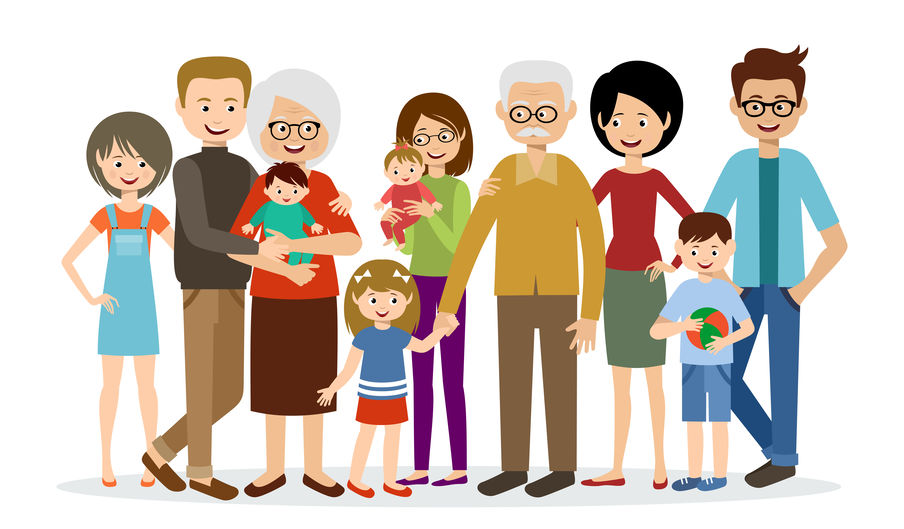
Growing up with my mother’s entire family was not a fun experience, but this was my thought process from the time I was a child until I was sixteen years old. We were raised, along with my siblings and cousins, to follow my grandparents’ and parents’ laws. We were taught to always say “po” and “opo,” and to do “mano po” to all elders, whether we knew them or not. We’ll get a slap in the face if we’re caught cussing. We must complete our daily routine of doing house chores before playing with our friends outside, or we will be grounded for the next week. Our TV viewing time is also restricted at night, with a maximum of 8:00 p.m. However, after all of the schoolwork is completed, there is free screen time on weekends. I admit that this was very unpleasant experience for me as a kid, and I believe it was when I was younger. Now I know that my early experiences and the fundamental principles I was taught shaped who I am today. My grandparents, parents, and the elders in our community instilled in me good moral values.
According to Piaget’s Theory of Moral Development, following rules kept us out of trouble when we were between the ages of 5 and 9. As a result, whatever we do, we must follow the rules set forth by our parents and grandparents, and if we do not, we will be subjected to necessary discipline or punishment, as described by Piaget’s moral realism. When we get older, we know that our elders’ rules are sometimes violated by themselves, but they are not punished. We begin to understand that rules are merely guidelines, and that breaking them is justified as long as our intentions and motivations are for the greater good, which Piaget refers to as moral relativism. I believe that our childhood experiences, as well as the influence of our peers, culture, and society, have a significant impact on a person’s morality.
Here is a short video clip of the present situation in which children find themselves, as well as how we can instill positive values in our children at home.


 Learning Together Now